
The Ultimate Guide to Exfoliating Safely
Introduction
Exfoliating is one of the most effective ways to achieve soft, glowing, even‑textured skin. But here’s the truth: most people over‑exfoliate without realizing it. When done correctly, exfoliation boosts radiance, prevents ingrown hairs, and helps your skincare products work better. When done incorrectly, it leads to redness, irritation, breakouts, and long‑term barrier damage.
This updated guide walks you through how to exfoliate safely, the best ingredients for your skin type, and the most common mistakes to avoid.
1. Why Exfoliation Matters
Healthy skin naturally sheds dead cells, but age, dryness, and environmental stress slow that process down. Exfoliation helps by:
- Removing dead skin cells that make skin look dull
- Smoothing rough patches on arms, legs, and elbows
- Preventing ingrown hairs by clearing trapped debris
- Improving product absorption so moisturizers and serums work better
- Brightening skin tone by revealing fresh, new skin
- Supporting cell turnover, which naturally slows with age
2. Types of Exfoliation
Physical Exfoliation
Includes:
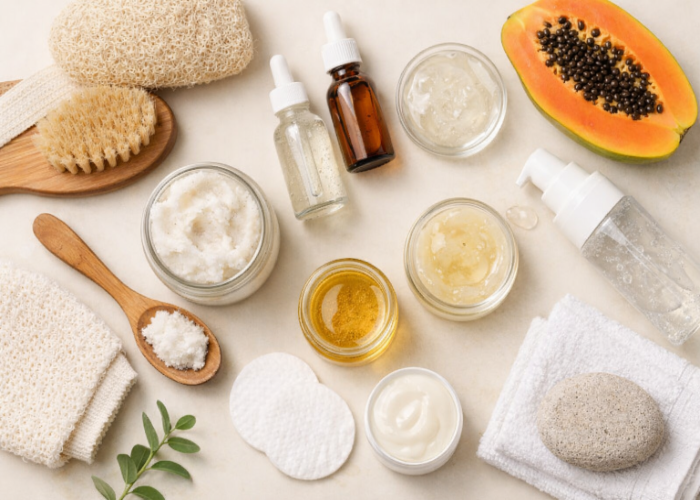
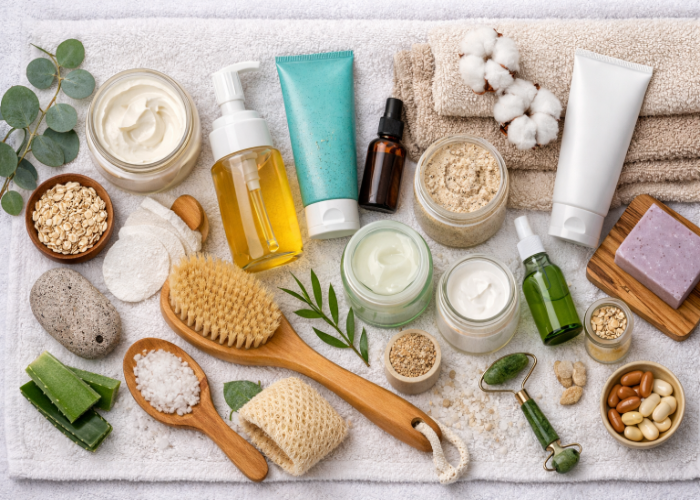
- Scrubs
- Loofahs
- Dry brushing
- Exfoliating mitts
- Microfiber cloths
Pros:
- Instant smoothness
- Great for keratosis pilaris (KP) when used gently
Cons:
- Can cause micro‑tears if particles are too rough
- Easy to overdo, especially on sensitive skin
Best for:
Body exfoliation, rough patches, KP, and people who prefer a “scrubbed clean” feeling.
Chemical Exfoliation
Includes:
- AHAs (lactic acid, glycolic acid, mandelic acid)
- BHAs (salicylic acid)
- PHAs (gluconolactone, lactobionic acid — newer, gentler acids)
- Enzymes (papaya, pineapple, pumpkin)
Pros:
- More even, controlled exfoliation
- Excellent for body acne, clogged pores, and dullness
- Less abrasive than scrubs
Cons:
- Requires proper frequency and sun protection
- Can cause irritation if layered with retinoids or vitamin C
Best for:
Sensitive skin, acne‑prone skin, hyperpigmentation, and anyone who prefers a no‑scrub method.
3. How Often Should You Exfoliate?
Your skin type determines your ideal schedule:
-
Dry skin: 1–2 times per week
(Dry skin already has a compromised barrier, so gentle frequency is key.) -
Oily skin: 2–3 times per week
(Oil slows natural shedding, so more frequent exfoliation helps prevent buildup.) -
Sensitive skin: Once per week
(To avoid redness and barrier disruption.) -
Body acne: 2–3 times per week with BHA
(Salicylic acid penetrates into pores to dissolve oil and prevent breakouts.) -
Keratosis pilaris (KP): 2–4 times per week
(Combination of gentle physical + lactic acid works best.)
4. How to Exfoliate Safely
Physical Exfoliation Tips
- Use gentle pressure — let the tool do the work
- Avoid scrubs with large, jagged particles (e.g., walnut shells)
- Never scrub sunburned, irritated, or freshly shaved skin
- Limit to 1–2 minutes per area
- Follow with a hydrating moisturizer to restore the barrier
Chemical Exfoliation Tips
- Apply to clean, dry skin for best absorption
- Start slowly: 1–2 times per week, then increase if tolerated
- Always moisturize afterward to prevent dryness
- Avoid mixing with retinol, benzoyl peroxide, or strong vitamin C on the same day
- Use sunscreen daily — exfoliation increases sun sensitivity
- Patch test new acids, especially glycolic acid (the strongest AHA)
5. Ingredients to Look For
AHAs (Alpha Hydroxy Acids)
- Lactic acid: Gentle, hydrating, ideal for dry or sensitive skin
- Glycolic acid: Stronger, brightening, great for rough texture
- Mandelic acid: Larger molecule = slower penetration, excellent for sensitive or acne‑prone skin
BHAs (Beta Hydroxy Acids)
- Salicylic acid: Oil‑soluble, unclogs pores, reduces body acne, prevents ingrown hairs
PHAs (Polyhydroxy Acids)
(Newer, trending in 2026)
- Gluconolactone, lactobionic acid
- Very gentle, hydrating, and ideal for reactive skin
Enzymes
- Papaya, pineapple, pumpkin
- Dissolve dead skin without friction
- Great for sensitive or redness‑prone skin
6. Common Exfoliation Mistakes
Avoid these to protect your skin barrier:
- Exfoliating daily (leads to redness, peeling, and sensitivity)
- Using harsh scrubs with jagged particles
- Skipping moisturizer afterward
- Using hot water, which strips natural oils
- Exfoliating broken, irritated, or sunburned skin
- Layering multiple acids in one routine
- Using exfoliants right before or after shaving
FAQ
Can I exfoliate before shaving?
Yes — exfoliating before shaving helps prevent ingrown hairs because it removes dead skin and buildup that can trap hair beneath the surface. It also allows the razor to glide more smoothly, reducing tugging and irritation.
Is chemical exfoliation safe for sensitive skin?
Yes, if you choose gentle formulas like lactic acid, mandelic acid, or PHAs.
These acids have larger molecules, meaning they penetrate more slowly and cause less irritation. They exfoliate without the friction of scrubs, making them ideal for reactive or redness‑prone skin.
Can I use multiple exfoliants at once?
No — stick to one exfoliant per routine because combining acids (or acids + scrubs) increases the risk of over‑exfoliation, redness, and barrier damage. Your skin needs time to recover between exfoliation sessions.
Is it normal to purge when starting chemical exfoliants?
Sometimes — but only temporarily.
Purging happens when clogged pores clear out faster due to increased cell turnover. It should last 2–6 weeks. If irritation, burning, or worsening breakouts occur, the product may be too strong.
Do I need sunscreen if I exfoliate?
Yes — absolutely.
Exfoliation removes dead skin cells, making your skin more vulnerable to UV damage. Without sunscreen, you increase your risk of hyperpigmentation, redness, and premature aging.
Should I exfoliate in the morning or at night?
Night is best because your skin repairs itself while you sleep, and exfoliation supports that renewal process. It also avoids sun sensitivity during the day.


🗨️ Reader Comments