
How to Choose the Best Foundation for Dry Skin
Introduction
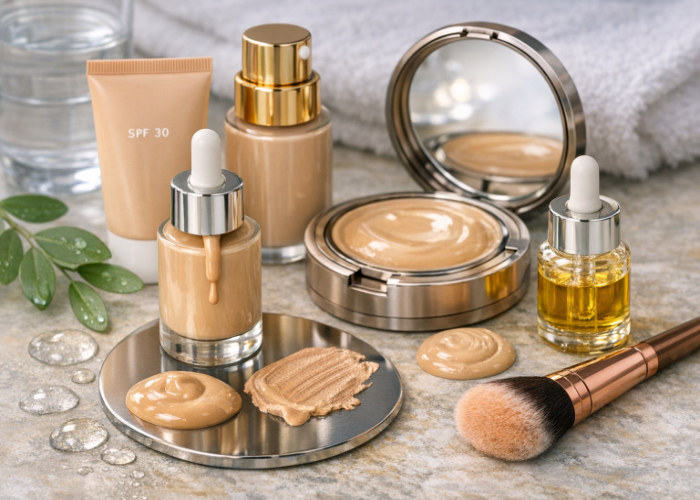
For anyone with dry or dehydrated skin, finding a foundation that looks smooth, fresh, and comfortable can feel like a never‑ending search. Many formulas promise hydration, but not all of them deliver—some cling to dry patches, settle into fine lines, or leave the complexion looking dull. The good news is that with the right ingredients and finish, foundation can actually support your skin rather than fight against it.
This guide breaks down what to look for, what to avoid, and how to choose a formula that keeps your skin looking healthy and radiant all day.
What to Look For in a Foundation for Dry Skin
💧 Hydrating Ingredients
Dry skin thrives with moisture‑boosting formulas. Look for foundations that include:
- Hyaluronic acid – draws water into the skin
- Glycerin – a classic humectant that prevents moisture loss
- Squalane, jojoba oil, argan oil, or other lightweight oils – help soften and smooth the skin
- Ceramides – support the skin barrier
These ingredients help prevent tightness, flaking, and that uncomfortable “foundation sitting on top of the skin” feeling.
✨ Dewy or Luminous Finish
A radiant finish is ideal for dry skin because it reflects light and gives the complexion a healthy glow. Dewy foundations also tend to be more flexible and less likely to emphasize texture.
Avoid:
- Matte foundations
- Powder foundations
- Long‑wear formulas marketed as “oil‑control”
These can make dryness more noticeable.
🧴 Cream or Liquid Formulas
Cream and liquid foundations blend more easily into dry skin and typically contain more emollients than powder formulas. They’re also less likely to settle into fine lines.
🎨 Choose the Right Coverage
Your preferred coverage depends on your goals:
- Light to medium coverage – great for evening out tone while keeping the skin looking natural
- Medium to full coverage – helpful for covering redness, discoloration, or uneven texture
Dry skin often looks best with flexible, buildable formulas rather than heavy, opaque ones.
🌿 Non‑Comedogenic Options
If your skin is both dry and sensitive or breakout‑prone, look for foundations labeled non‑comedogenic. This simply means they’re less likely to clog pores.
🌞 SPF (Optional but Helpful)
Some foundations include SPF, which adds a layer of protection against UV damage. It shouldn’t replace your daily sunscreen, but it’s a nice bonus.
⏳ Longevity Without the Dryness
Hydrating foundations tend to wear better on dry skin because they don’t crack or separate as the day goes on. Look for formulas described as:
- “Long‑lasting hydration”
- “Skin‑like finish”
- “Flexible wear”
These usually indicate a comfortable, breathable formula.
Final Thoughts
Choosing the best foundation for dry skin comes down to understanding what your skin needs: moisture, flexibility, and a finish that enhances your natural glow. By focusing on hydrating ingredients, dewy textures, and formulas that support the skin barrier, you can achieve a smooth, radiant complexion without emphasizing dryness.
Don’t be afraid to experiment—sometimes the perfect match is a combination of the right prep, the right formula, and the right application technique. With the right foundation, dry skin can look fresh, luminous, and beautifully healthy.
🗨️ Reader Comments